



Medical Insurance (Part B)

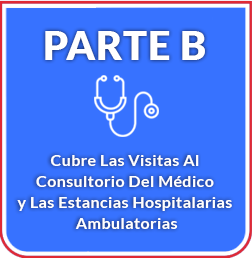
Part B covers preventive services, medical supplies, and medical services important in treating your health condition. Part B includes outpatient care, ambulance services, and durable medical equipment. It also covers part-time home care and rehabilitative services, including physical therapy.

ELIGIBILITY

Anyone eligible for Medicare Part A is qualified for Medicare Part B. Key component of Original Medicare that covers medically necessary services (doctor visits, outpatient care, home health) and preventive services (screenings, vaccines) for people 65+ or with disabilities. In 2026, the standard monthly premium is with a annual deductible.

If you are under 65 years of age and getting social security benefits, you will automatically get enrolled in Medicare Part B after 24 months of disability benefits.

What does Medicare Part B cover?

Medically necessary services: Services or supplies that are needed to diagnose or treat your medical condition

Preventive services: Health care to prevent illness (like the flu) or detect it at an early stage, when treatment is most likely to work best.

Part B Medicare services cover the following:

  • Clinical research
  • Limited outpatient prescription drugs
  • Mental health
  • Inpatient
  • Outpatient
  • Partial hospitalization
  • Ambulance services
  • Durable medical equipment (DME)

What does Part B not cover?

Part A and B does NOT cover dental, vision, Rx, or hearing care.

Medicare Part B Costs

Part B monthly premium for 2026 starts at $206.90 x month. An individual might pay higher premium if making over $100,000.00 x year. Part B premiums increase every year in January. The premium is automatically deducted from your Social security benefits.

When to apply:

6 months prior to your 65th birthday, the month of your birthday and three-months after during Open Enrollment. (You have a 7 month window in total). If you miss your Open Enrollment, you can enroll
the following year between Jan-March and Part B will become active the 1st of the next month.


If you’re not automatically enrolled, you can also apply directly for Medicare supplement Insurance part B via the Social Security website either in person or by calling at 1-800-772-1213 on working days.

Medicare Part B consists of medical insurance that is part of Medicare and covers medical services and supplies. These are medically important in treating your health condition. Part B includes outpatient care, ambulance services, preventive services, and durable medical equipment. It also covers part-time home care and rehabilitative services, including physical therapy.

Medicare Part B covers:

  • Medically necessary services: Services or supplies that are needed to diagnose or treat your medical condition and that meet accepted standards of medical practice.
  • Preventive services: Health care to prevent illness (like the flu) or detect it at an early stage, when treatment is most likely to work best.

You pay nothing for most preventive services if you get the services from a health care provider who accepts assignment.

Part B Medicare services cover the following:

  • Clinical research
  • Limited outpatient prescription drugs
  • Mental health
  • Inpatient
  • Outpatient
  • Partial hospitalization
  • Ambulance services
  • Durable medical equipment (DME)

Part B Medicare insurance coverage is based on the following factors:

  • Your state laws
  • Federal laws
  • National coverage decisions
  • Local coverage decisions made by companies

Medicare Part B Costs

U.S. citizens can automatically get Medicare Part B insurance, and others need to sign up for Part B Medicare supplement. Every person who gets enrolled in Part B Medicare pays a premium each month. It also automatically deducted from their benefit payment each month if they get benefits from the following:

  • Social security
  • Railroad retirement board
  • Personnel management office

And If you are not getting these benefits, you pay through a bill every month.

People usually pay a standard premium amount. If your gross income is above a certain amount, you also pay an income-related monthly amount. Medicare also uses a modified adjusted gross income reported for Part B MadIcare on their tax return from 2 years ago. This tax return information is the most recent tax return provided to social security administration by the IRS.

A standard Part B Medicare premium amount in 2025 is $185.00.

Medicare Part B Enrollment

If you’re receiving retirement benefits before the age of 65 or qualify Medicare insurance because of a disability at an early age you will automatically be enrolled in Medicare Part A and Part B as soon as you become eligible.
If you do not enroll during your initial enrollment period and also not qualify in the special enrollment period. In that case, you have the option to sign up during the annual enrollment period, which starts from 1st January to 31st March of each year and coverage starting from 1st July.
If you’re not automatically enrolled, you can also apply directly for Medicare supplement Insurance part B via the Social Security website either in person or by calling at 1-800-772-1213 on working days.
Remember, when you reach the age of 65 and have Medicare Part B, your six-month Medicare open enrollment period begins its time to purchase a Medicare Part B Supplemental plan. You’ll get a guaranteed-issue right to buy any Medicare plan without paying a higher premium or medical underwriting once you get enrolled in Medicare Part B, not to miss this initial guaranteed-issue enrollment period for Medigap supplement insurance.

Medicare Part B Eligibility

Anyone eligible for Medicare Part A is qualified for Medicare Part B by enrolling and paying a standard monthly premium. And if you are not able for Medicare Part A, you can also qualify for Medicare Part B by meeting the following criteria:

  • You reached ta the age of 65 years or older.
  • You are a U.S. citizen.
  • You are a permanent resident residing in the U.S. for at last five continuous years.

You may also qualify for automatic Medicare Part B enrollment if you are a disabled person. Or if you are under 65 years of age and getting social security benefits, you will automatically get enrolled in Medicare Part B after 24 months of disability benefits. You will also get Medicare Part B insurance enrollment before 65 if you experience last-stage renal disease or amyotrophic lateral sclerosis.

Medicare Part B Premiums

Your Medicare Part B premiums can change from year to year, and cost can vary based on your situation. For many people, it is deducted automatically from their social security benefits.

The monthly Part B premium is $185.00 in 2025.

But if your income exceeds a certain amount, your premium may also increase than the standard premium, as there are different premiums for different income levels in Medicare part B.

If you don’t get social security or rail board benefits, you’ll get a bill to pay your premiums:

    • Part B for medical insurance
    • Part A for hospital insurance

Hospital Indemnity Insurance Benefits

This benefit is generally used to help pay for the major co-payments that are usually associates with Medicare Part C plans. Lump-sum payment Paid directly to you — not hospitals or doctors — to spend on whatever you need Guaranteed acceptance No medical questions and no waiting period for you and eligible family members Financial support Paid benefits for covered services and treatment— regardless of what your medical insurance may cover Coverage for care during your hospital stay Even with medical insurance, a hospital stay can be costly. Plan deductibles, copays, and out-of-network costs can add up fast, not to mention costs outside of medical needs, like your mortgage, childcare expenses, transportation and more. Hospital indemnity insurance can help with out-of-pocket costs while you’re in the hospital and recovering to help reduce the financial impact while you heal. With this supplemental plan from MetLife, you:
  • Get competitive rates by enrolling through work
  • Can take your coverage with you if you leave your job or retire
Do you need hospital indemnity insurance? Reasons to consider adding this supplemental plan to your insurance coverage lineup:
  • You have a chronic health condition
  • You have a family history of serious illnesses
  • You have a planned procedure or surgery
  • You’re looking for additional financial reassurance and support
How hospital indemnity coverage works Indemnity means to secure or protect against a loss or other financial burden. That’s exactly what hospital indemnity insurance does. It helps protect finances for individuals and families when faced with a hospital stay. Here’s how it works: An insured person is admitted into a hospital for a minimum of 24 hours and the coverage pays benefits directly to the insured person. The money can be used for anything the recipient wishes. When setting up a group hospital indemnity insurance plan, employers have flexibility with things like benefit amounts and total days payable. This customization allows employers to develop a plan that balances coverage options and the premium rate employees will pay. Here are some benefit options that hospital indemnity insurance may include.
  • Daily hospital confinement: Pays a benefit for each day of an inpatient hospital stay. Some plans may pay a separate benefit for the first day of an inpatient stay$250 – $750 per day.
  • Hospital intensive care: Pays for an admission to a hospital intensive care unit, usually in addition to first-day confinement and daily hospital confinement benefits.
  • Wellness benefits: Wellness riders pay benefits when insureds complete one of many preventive care exams, such as mammography, colonoscopy, lipid panel tests and more.
  • Surgery benefits: Pays for surgeries performed in a hospital or an ambulatory surgical center.
  • Mental and nervous disorder: Pays benefits for an inpatient stay in a hospital or similar facility for mental or nervous disorder treatment.
  • Drug addiction and alcoholism: Pays benefits for an inpatient stay in a hospital or similar facility for the treatment of drug addiction or alcoholism.
  • Ambulance Services Indemity Benefit Rider: Ambulance services are often used before hospital confinement. This rider pays $250 per day for ground or air transportation for combined maximum of four days per calendar year.
  • Urgent Care Center Indemnity Benefit Rider: If you obtain urgent care services, this rider will pay you a cash benefit of $50 per day for up to four days each calendar year.
  • Lump Sum Cancer Benefit Rider: If you receive a first diagnosis of internal cancer of malignant melanoma, this rider will pay you one cash benefit payment in the amount of $1000, $2500, $5000, $7500, or $10,000. Hospital confinement is NOT required.
  • Outpatient Surgery Indemnity Benefit Rider: If you have outpatient surgery, this rider will pay you $250, $500, $750, or $1000 for up to two days each calendar year.
  • Skilled Nursing Facility Indemnity Benefit Rider: Once you leave the hospital, you may need services at a skilled nursing facility. This rider will pay you $100, $150, or $200 per day up to 50 days when you’re confined to a skilled nursing facility.
For More Information, CLICK HERE for a video presentation: Dental, Vision and Hearing Aids  Need additional coverage for your dental, vision or hearing aids? Supplemental plans may be available in your state.

Services include:*

Dental, Preventative, Basic procedures.
Major procedures: Whitening, Dentures, Implants.
Vision exam: Allowance for contacts, frames and lens.
Hearing exam and Hearing Aids.

FOR MORE INFORMATION, PLEASE FEEL FREE TO CALL US AT:
855-474-6253
OR
Click Here